

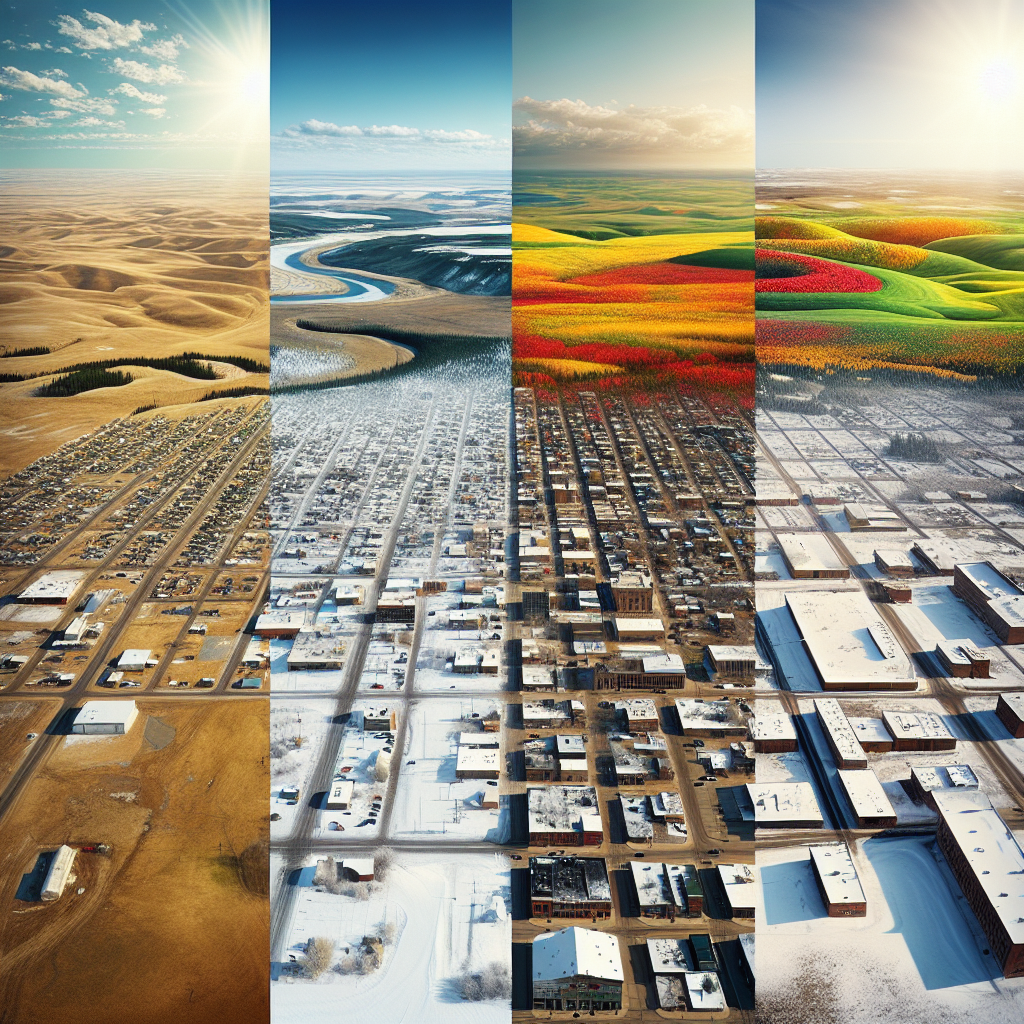
Fargo, North Dakota, experiences a humid continental climate characterized by significant seasonal variations. Understanding these patterns is essential for residents and visitors alike.
Winter: Cold and Snowy
Winters in Fargo are notably harsh, with average temperatures in January around 10°F (-12°C). Snowfall is common, averaging approximately 51.4 inches (130.6 cm) per season. Residents should prepare for frigid temperatures and potential blizzards during this time.
Spring: Transition and Flooding Risks
Spring brings a gradual warming, with April temperatures averaging 43°F (6°C). However, this season also poses flooding risks due to melting snow and spring rains. The Red River Valley is particularly susceptible, so staying informed about flood forecasts is crucial.
Summer: Warm and Humid
Summers are warm, with July temperatures averaging 71°F (22°C). Thunderstorms are frequent, contributing to the majority of the annual precipitation. It’s advisable to stay updated on weather alerts during this season.
Autumn: Cool and Crisp
Autumn sees a cooling trend, with October temperatures averaging 46°F (8°C). This season is generally pleasant, offering a respite before the onset of winter.
By understanding Fargo’s seasonal climate patterns, residents can better prepare for the challenges and enjoy the unique experiences each season offers.