

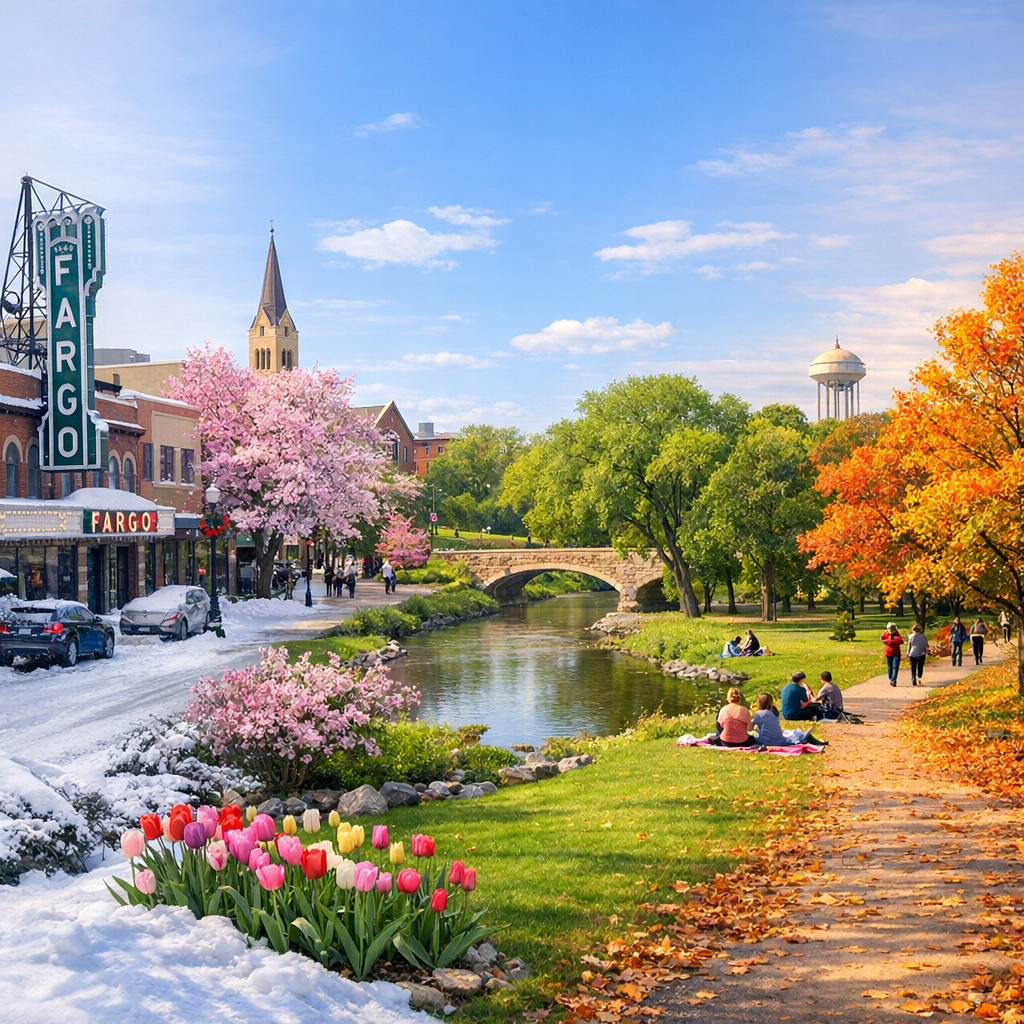
Fargo, North Dakota, experiences a diverse range of weather conditions throughout the year, characterized by its humid continental climate. This results in hot summers, cold winters, and moderate precipitation spread across all seasons.
Winter: Cold and Snowy
Winters in Fargo are notably harsh, with average high temperatures in January around 19°F (-7°C) and lows dipping to 1°F (-17°C). Snowfall is common, contributing to the city’s average annual precipitation of approximately 20.9 inches. Residents should prepare for frigid temperatures and potential snow accumulation during these months.
Spring: Gradual Warming
Spring brings a gradual increase in temperatures, with March seeing average highs of 36°F (2°C) and lows of 19°F (-7°C). By May, temperatures rise to an average high of 69°F (21°C) and a low of 45°F (7°C). This season also marks an uptick in precipitation, with May averaging 3.02 inches of rainfall.
Summer: Warm and Wet
Summers are warm, with July being the hottest month, averaging highs of 82°F (28°C) and lows of 60°F (16°C). June typically records the highest precipitation, averaging 4.11 inches, making it the wettest month. Thunderstorms are common during this period, so staying informed about weather forecasts is advisable.
Autumn: Cooling Down
Autumn sees a decline in temperatures, with September averaging highs of 72°F (22°C) and lows of 49°F (9°C). By November, temperatures drop further, with average highs of 39°F (4°C) and lows of 22°F (-6°C). Precipitation decreases during this season, averaging around 2.19 inches in October.
Understanding these seasonal patterns is essential for residents and visitors to prepare adequately for Fargo’s varying weather conditions. Staying informed through local weather updates and planning accordingly can help navigate the city’s diverse climate throughout the year.